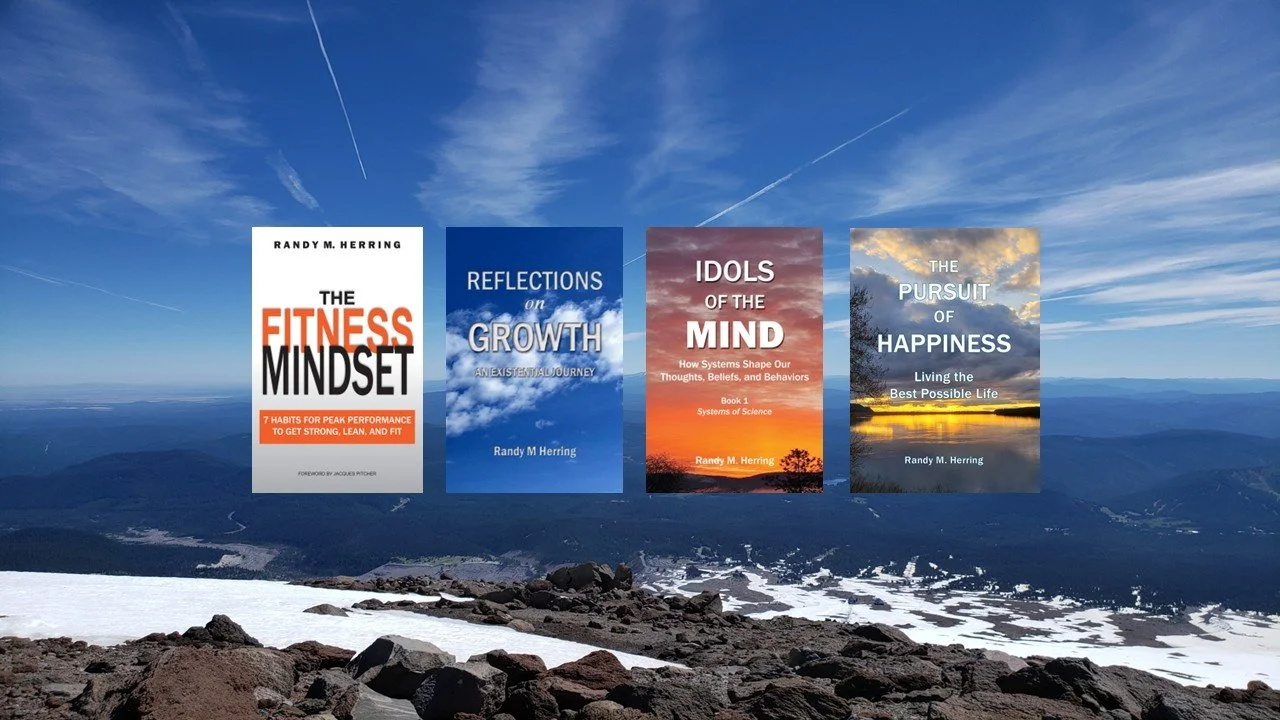
Reflections on Growth
During my mid to late twenties, I grappled with an existential dilemma: If I am to truly exist as a human being and become who I am meant to be, I must take the risk of breaking free from the ideological systems that have shaped my existence—systems that told me how to think, who I was, and how I should live.
I lived and worked in Japan on three separate occasions over the span of seven years, from my early to late twenties. During my first time there, I took a one-year break from my university studies to travel to Japan and experience the work of a student missionary. I lived in Nishinomiya and worked in Osaka, where I taught English conversation and Bible classes.
I valued my first experience in Japan as a student missionary so deeply that it transformed me into a religious optimist. I became fully immersed in the system of a particular Christian organization, drawn to its sense of purpose and its mission to make a meaningful difference in people’s lives.
My assimilation into the system was so profound that, upon returning to the United States, I took two significant steps at my university. First, I began pursuing a bachelor's degree in religious studies, eager to deepen my understanding of the subjects I had taught in Japan. Second, I initiated a community outreach program for the homeless, motivated by a desire to better understand their struggles and explore what I could—and couldn’t—do to make a meaningful difference.
Two years later, I graduated with a degree in religious studies. A few months after that, I enrolled in a graduate program in religious education, intending to teach religion within the school system of that particular Christian denomination. However, the following year, I became disillusioned with the program. Just as I was questioning my path, I received an invitation to return to Japan. I decided to leave the graduate program behind and flew back for a second time, drawn by the value of my first experience and the mission that still called to me.
April 1988 in Tokyo marked a defining moment in my life, the beginning of a profound shift that would ultimately lead me to break away from the organization’s system a year later. This period of transition prompted deep reflection on my experiences, and by the following year, I began writing what would become Reflections on Growth.
We cannot fully separate ourselves from an ideological system. Employers, for example, are part of a system that provides employees with the essential means of survival. To illustrate this, consider the first three levels of Maslow’s hierarchy of needs. The first level addresses physiological needs: food, water, shelter, and sleep. The second level focuses on safety needs: security, employment, resources, and health. The third level pertains to love and belonging needs: friendship, intimacy, family, and social connections.
When an employer and an employee share a close friendship outside the workplace, the employee might feel a dual sense of obligation—not only to the business but also to the individual owner. This connection can blur the lines between the person and the system, causing the employee to become increasingly assimilated into the owner's identity. Over time, this can lead to a sense of losing oneself, even slipping into a state of “nothingness.” Similarly, anyone can fall into this nothingness simply by following an influencer or becoming part of a social group, often without even realizing it.
I began by questioning the very system that had shaped and absorbed me. In search of understanding, I turned to philosophy, exploring works like Aristotle’s Nicomachean Ethics, Nietzsche’s Ecce Homo, and Adler’s Great Ideas. I immersed myself in their ideas, hoping to uncover the deeper reasons behind my experiences and, more importantly, to discover what I could change within myself to transform my circumstances—and ultimately, my world.
I sent letters of discontent to the representatives of the organization, directly confronting them with my concerns. In these letters, I proposed ideas for reform, hoping to improve the system for the benefit of my colleagues. A few months later, as a result of my actions, I was asked to leave both my position and Japan.
Social systems often lack a focus on personal growth and the cultivation of authenticity. According to Maslow, the fourth and fifth levels of his hierarchy of needs are esteem and self-actualization. Esteem needs include respect, self-worth, recognition, and freedom. Self-actualization, on the other hand, is about realizing one’s full potential—expressed through simplicity, autonomy, richness, and a deep sense of aliveness.
I flew to Montana, where I stayed with my grandmother in Missoula and worked two jobs. It was the beginning of my journey toward self-discovery. During this time, I reflected on my mental and spiritual well-being, engaging deeply with my inner self. I wrote introspective essays about my personal state and the shifting state of the world around me. Through this process, I developed a deeper appreciation for myself, for others, and for the world. I also continued to send letters to the representatives of the organization in Japan, expressing my dissatisfaction and calling for change. After six months, I left Montana and moved to Oregon.
I drove to Portland and stayed with my father for a couple of weeks until I sold my car. Once it was gone, I bought a one-way ticket back to Japan. I packed my philosophy books, typewriter, a bowling ball, and a set of dress clothes. This third time to Japan was meant to be long-term—an opportunity not just to teach English conversation, but, more importantly, to study, observe, write, travel, and exercise.
After a couple of weeks in Japan, I began working for a company in Chiba, putting in 20 hours a week and living comfortably. In my free time, I read the newspaper, studied philosophy, and wrote essays and letters. As Nietzsche put it, I felt “fearless.” I found myself facing a “great health”—a vast, unexplored territory filled with perspectives on what is beautiful, strange, unsettling, terrible, and divine.
While it’s impossible to fully detach ourselves from an ideological system, we can become aware of how such systems can stifle our growth and limit the potential of our existence. By recognizing this, we have the power to change what is necessary to awaken our conscious, autonomous selves—free from the constraints of collective identity. Instead of conforming to the norm, consuming everything around us, and blending in with the masses, we can nurture our true self by creating something meaningful and living as a free spirit.
I wrote these reflective essays thirty-five years ago, before the rise of the Internet, Google, and social media, compiling them into Reflections on Growth. Since then, they have been revised for this book. My way of life has changed little since I wrote these essays. I am still reading, still writing, still learning, and still thinking.
Writing and organizing the Afterword took me two years. To broaden my knowledge in areas where I was lacking, I delved into a variety of fields in addition to philosophical, religious, and biblical studies: depth psychology, social psychology, the history of early colonial America, biomedical ethics of human enhancement, cognitive neuroscience, and the ethics of artificial intelligence.
This journey has been one of personal growth, while reflecting on my experiences, which has, in turn, strengthened my sense of self. My hope is that by reading these Reflections, the reader may also embark on their own journey of self-exploration, discovering and strengthening their true, authentic self.
Copyright © 2025 by Randy M. Herring
ISBN 979-8-218-56596-1