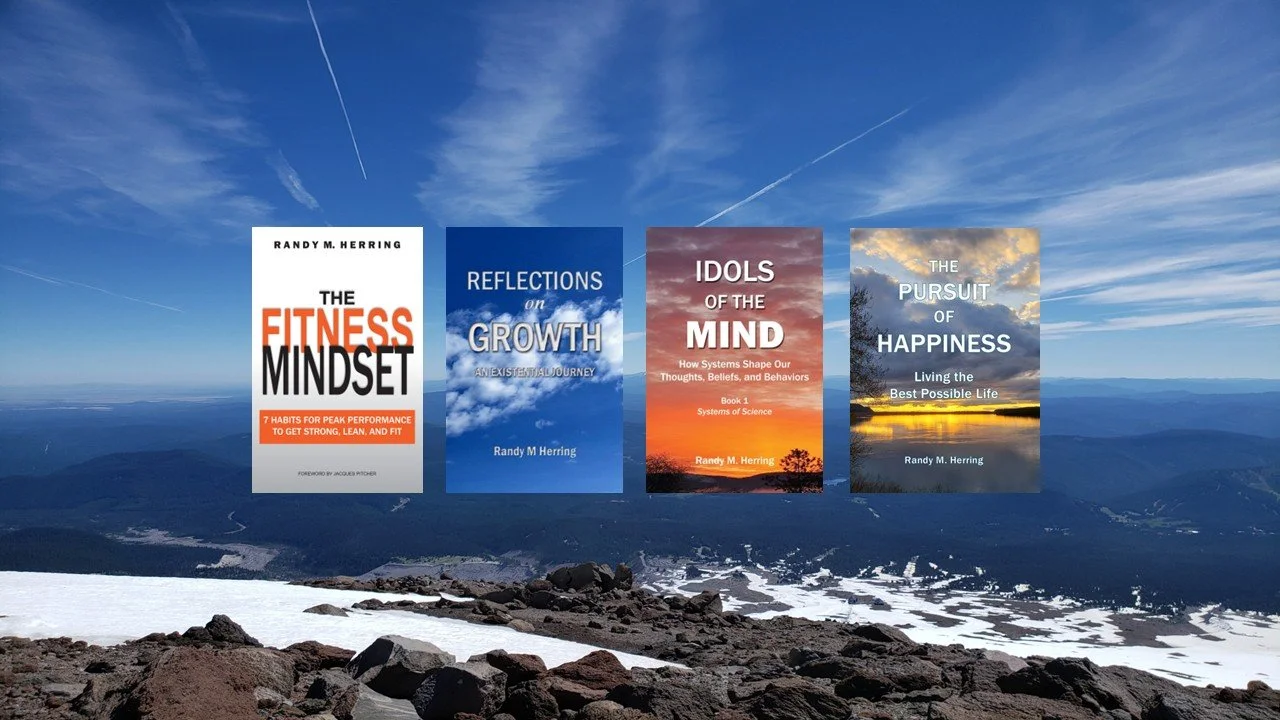
The Fitness Mindset
Mindset is influenced by external factors through life’s experiences and the lessons learned from them. Mindset is nurtured—repeatedly.
Rewind 40 years.
When I was 15, I was timid and weighed only 115 pounds. I started lifting weights because I wanted to be stronger, bigger, and more confident. I gained 55 pounds in eight months, then lost 25 pounds in the next four months. In one year, I gained 30 pounds of muscle. I was more confident and ready to face my fears.
Fast forward 40 years; an older body, a stronger mind.
In January, a year before COVID-19, I looked into the mirror at the 56-year-old version of myself and felt disgusted. My pants were tighter, and I didn’t feel good about myself. I wanted to feel and look better. I had to reclaim the fitness lifestyle, using the principles of resistance training to transform my body and get healthy and in shape again. I lost 17 pounds in the first 16 weeks and 25 pounds in one year. I was stronger, leaner, and fitter. I was ready to tell my story—or at least, that’s what I thought.
Fast forward to mid-March, during the COVID-19 pandemic of 2020.
I wasn’t going to stop training and let my body and mind turn to mush because of the mandated gym closures. Instead, I channeled my frustration and the negative energy of the pandemic by adapting to the circumstances, exercising with resistance tubes every morning. This gave me a single-pointed focus, helping me respond to the stress of the pandemic and the lockdowns.
When the first lockdown was lifted after 51 days, I was stronger, more muscular, and more defined. Engaging in physical exercise gave me the resilience to think strategically and fight back when faced with challenges. I was ready to tell my story.
I am no Arnold Schwarzenegger, no Mat Fraser, and no David Goggins. And I am certainly no titan. But like Arnold, a regimented exercise routine put me on a path to better health and fitness.
I consider myself a regular guy in good athletic shape for my age—and a three-time testicular cancer survivor. The first diagnosis came in July 2009, leading to the removal of my left testicle. A decade later, midway through my second transformation, in July 2019, I faced a second recurrence of testicular cancer, which resulted in the removal of my right—and only remaining—testicle. That event marked the beginning of Testosterone Replacement Therapy (TRT), monitored by my physician. The third recurrence hit in November 2021, just six months after publishing this book. I underwent an intense chemotherapy regimen of 40 bags over the next 10 weeks and continued to exercise whenever I could.
Chemo altered my body’s chemistry, condition, and appearance. I lost my hair, my oxygen levels decreased, and I developed blood clots. Because my prostate levels rose, my doctor discontinued my TRT on two separate occasions for 14 months, forcing my body to rely solely on estrogen. I gained belly fat, my skin softened, I experienced frequent hot and cold flashes, and I felt more pain throughout my body. I had to adjust my training variables to accommodate these changes.
The Fitness Mindset: 7 Habits For Peak Performance was first conceived during my personal body transformation from 2019 to 2020. It was conceived a second time, when I began writing the book, during the COVID-19 pandemic and lockdowns from spring to winter of 2020–2021, as I continued to exercise.
This book is written for three reasons. First, engaging in resistance training can set you on a path to better health and fitness while helping you manage your mind. Second, learning how to exercise effectively can equip you with the skills to train at your best and master your mind. Third, regular physical exercise helps you adapt to life’s stressful challenges, building confidence and giving you a resilient mind to overcome setbacks and conquer everyday obstacles.
Improving the body influences the mind. The body obeys the mind because the mind controls what the body does. Therefore, mindset—the fourth habit—is linked to the habits that affect how we think and act, which in turn control the other six habits.
These other habits involve what and how often you eat, how well you can focus during exercise, how effectively you recover, how suitable your exercise modality is, how well you can train for muscle tension, and how effectively you can adapt your body to stress and transformation. Each habit is a learnable skill that you practice repeatedly.
To be the change you want to see, you must take consistent action to create it. A strong mind drives transformation, and a stronger mind fuels subsequent transformations. Experience The Fitness Mindset. Go Strong. Perform Well.
Copyright © 2021 by Randy M. Herring
ISBN 978-0-578-76119-0